by Wavefront Software
Laboratories today face increasing pressure to improve efficiency, maintain compliance, manage growing volumes of data, and deliver accurate results faster than ever before. As these demands increase, many laboratory managers begin asking an important question:
What is a LIMS system, and does my laboratory need one?
A Laboratory Information Management System (LIMS) is software designed to help laboratories manage samples, automate workflows, improve traceability, and centralize data management. Whether you operate a commercial testing laboratory, a manufacturing quality lab, an environmental laboratory, or a research facility, a LIMS can help streamline operations and support long-term growth.
In this guide, we’ll cover:
– What a LIMS system is and what LIMS stands for
– What a LIMS is used for and how it works
– Key features of a modern LIMS
– The signs your laboratory needs one
– The benefits of implementing a modern LIMS
What Is a LIMS System?
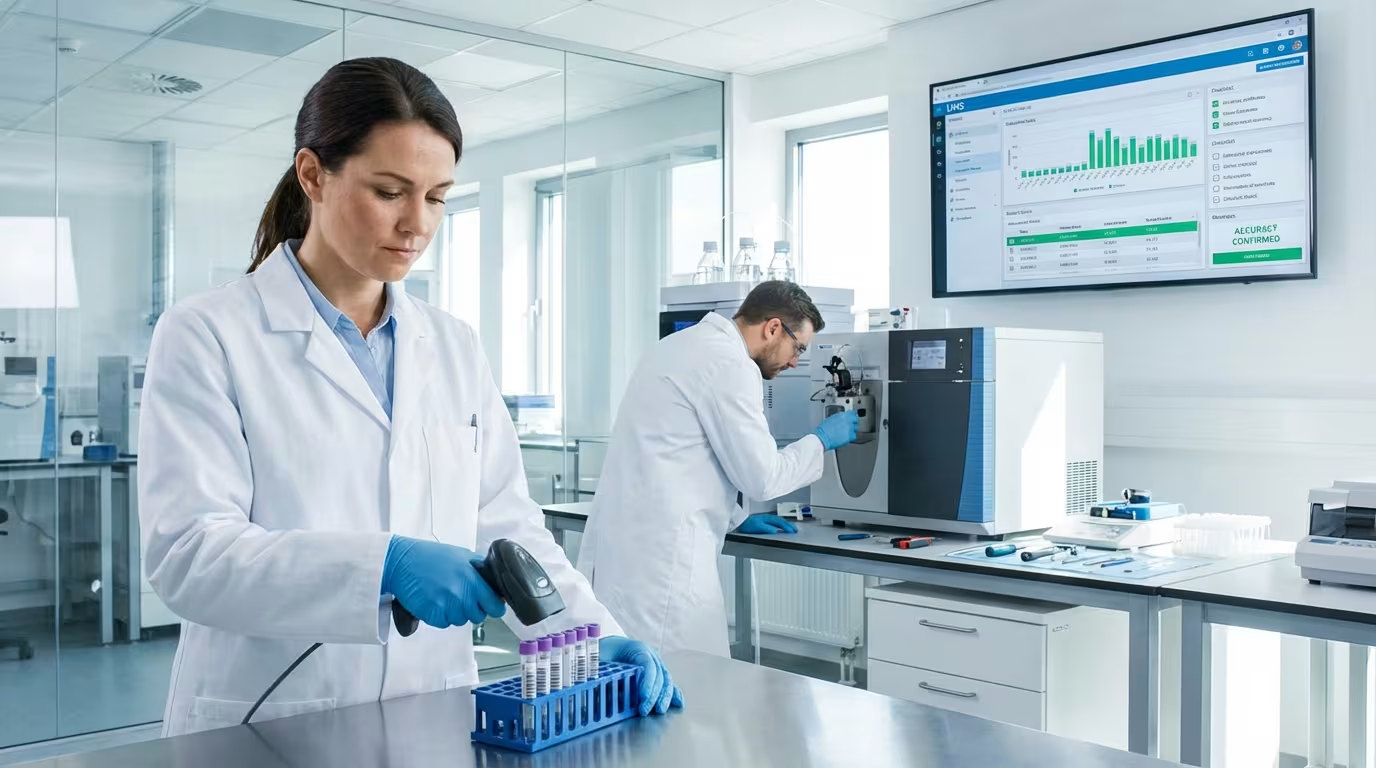
A LIMS system, or Laboratory Information Management System, is software designed to manage laboratory samples, testing workflows, results, reports, and the data associated with all of it. In essence, a LIMS acts as your laboratory’s digital backbone: the single system of record that ties a sample to its test results, the people who ran those tests, the instruments used, and the final report a customer receives.
The primary purpose of a LIMS is to help laboratories improve efficiency, maintain data integrity, and ensure complete traceability throughout the testing process. Instead of relying on spreadsheets, paper records, or disconnected databases, laboratories use a LIMS to centralize information and improve visibility across the organization, from the bench technician logging a result to the lab director reviewing turnaround times.
Modern LIMS platforms are typically browser-based and hosted on secure cloud infrastructure, offering accessibility from anywhere along with robust security measures, often including SOC 2-aligned hosting, role-based access controls, and validated backup processes that matter when you’re answering to an accreditation body or a customer’s quality team. This cloud-based approach also allows a LIMS to integrate with the rest of the lab’s environment: connecting to instruments directly, exchanging data with an ERP or billing system, and importing historical records from a legacy LIMS or spreadsheets during onboarding, all while minimizing the IT overhead that used to come with on-premise lab software.
What Does LIMS Stand For?
LIMS stands for Laboratory Information Management System. The term refers to software that manages laboratory data, workflows, samples, testing activities, reporting, and compliance requirements, essentially everything that happens to a sample between intake and final report.
What Is LIMS Used For?
Key Features to Look For
Modern LIMS platforms offer significantly more functionality than older laboratory software or homegrown spreadsheet systems.
Common features include:
| Sample Management | Track sample location, status, ownership, and full testing history in one place, rather than across multiple disconnected logs. |
| Workflow Automation | Automate repetitive laboratory tasks and approval steps, so staff spend less time on data entry and more time on the actual science. |
| Instrument Integration | Connect directly to laboratory instruments to eliminate manual data entry and the transcription errors that come with it. |
| Audit Trails | Maintain a complete, timestamped history of every action performed in the system, including who did what and when, which is essential during accreditation audits. |
| Reporting & Analytics | Generate reports and identify trends across laboratory operations without needing to manually compile data from multiple sources. |
| User Security | Control access based on roles and responsibilities, so sensitive data and approval steps are only available to the right people. |
| Laboratory Dashboards | Provide real-time visibility into laboratory workload, priorities, and performance, so the whole team is working from the same information. |
Signs Your Laboratory Has Outgrown Its Current System
Now that you have a basic understanding of what a LIMS system entails, the next step is determining whether your laboratory truly needs one. To aid in this decision-making process, we’ve developed four key topics that will help you assess your laboratory’s need for a new LIMS system.
1. Growth: Adapting to New Tests, Data, And Expanding Needs
In the dynamic world of laboratory operations, stagnation is not an option. Growth, whether for commercial or captive laboratories, hinges on the ability to adapt to change. This adaptation often manifests in new testing methodologies, expanded material testing capabilities, or the need to capture new data points about specific tests, samples, or orders. Therefore, to maintain market relevance or support evolving production lines, laboratories must epitomize flexibility.
However, this necessary flexibility can be hampered by outdated or inflexible LIMS systems. Laboratories using such systems may face:
- Delays and increased costs due to required system modifications
- Forced workarounds in unsupported or non-LIMS environments
- Reliance on staff memory for special data entry procedures
- Overloaded data fields becoming catch-alls for diverse information
- Manual, off-system processes for new tests that can’t be integrated
If these scenarios resonate with your laboratory’s current situation, it may be time to consider implementing a new LIMS system. When evaluating options, prioritize LIMS systems that offer user configurability. This feature ensures that not only can you address immediate changes, but you’ll also be equipped to handle future modifications swiftly, without the need for extensive coding interventions.
2. Traceability: Ensuring Comprehensive Data Tracking
Traceability is a cornerstone of laboratory accreditation and a critical focus during audits. Additionally, the value of test results is intrinsically linked to their traceability—from the final result back to the original sample and order. Therefore, results must be readily identifiable by both the laboratory and the laboratory’s clientele. In today’s complex laboratory environments, traceability extends beyond just sample lineage. Some of the other areas it encompasses are:
- Equipment used for each test
- Personnel who conducted the tests
- Precise timing of test execution
Maintaining this level of detailed traceability poses significant challenges for laboratories relying on Excel-based systems or legacy LIMS that were designed for simpler, less demanding environments.
If your laboratory is grappling with issues related to sample or test-level traceability, or if you’re aiming to achieve certification to ISO or perhaps a customer’s requirements, implementing a modern LIMS system can be the solution.
By leveraging a sophisticated LIMS system, you can confidently navigate complex traceability requirements. The system acts as a reliable backbone, automatically populating critical fields and maintaining a detailed audit trail. This not only enhances your laboratory’s credibility but also significantly reduces the risk of human error in traceability documentation.
3. Prioritization: Optimizing Sample Processing Efficiency
Improving efficiency and productivity is a critical objective for any laboratory. For commercial laboratories, enhanced testing speed and efficiency translates to increased capacity for customer requests. In captive laboratories, faster turnaround times enable production lines to create and ship materials more rapidly. A key component in improving turnaround time is ensuring that testing is conducted in a prioritized manner—essentially, that laboratory personnel are focusing on the right tasks at the right time.
Laboratories utilizing outdated LIMS solutions or home-grown systems that lack integrated prioritization tools often face challenges in this area. Their methods for ensuring accurate prioritization can be:
- Scattered and limited in effectiveness
- Heavily reliant on manual processes
- Inflexible and resistant to necessary changes
- Prone to communication breakdowns across team members
A modern LIMS system addresses these challenges by offering robust prioritization tools. For instance, advanced LIMS systems provide:
- Prioritization features integrated directly into the workflow
- Real-time updates to laboratory status boards
- Unified priority lists accessible to all team members
- One-click priority updates by laboratory managers
These features ensure that all laboratory personnel work from the same, up-to-date priority list, changes in prioritization are communicated instantly across the entire team, and laboratory managers can adjust priorities with confidence, knowing the entire lab will immediately have the updated information. This comprehensive approach to prioritization management through a LIMS system fosters a more coordinated and responsive laboratory environment.
4. Data Management: Streamlining Information Access and Analysis
One of the most critical indicators that a laboratory needs a new LIMS system is challenges with data management. Excel-based systems or outdated LIMS solutions often require test data to be saved across various spreadsheets or folders. While this approach might have been sufficient initially, over time, as complexity increases, it becomes increasingly problematic.
Key issues with outdated data management systems include:
- Time-consuming data extraction
- Difficulty in querying results and fields across all tests
- Challenges in analyzing correlations between different test results
- Inability to easily track how changes in one sample affect results in another
If your laboratory is grappling with these data management issues, it’s a strong indication that implementing a new LIMS system should be a priority. Modern LIMS systems offer robust solutions to these challenges:
- Centralized data storage: All data is stored in a single, searchable database
- Advanced querying capabilities: Users can create complex queries without coding knowledge
- Intuitive interfaces: Systems like Wavefront LIMS allow natural language queries directly from the LIMS interface
- Real-time data accessibility: As your lab captures data, it’s immediately available for in-depth analysis
By implementing a LIMS system with advanced data management capabilities, laboratories can transform their approach to information handling. This not only saves time and reduces frustration but also unlocks the full potential of your laboratory’s data. With easier access to comprehensive data sets, your team can focus on deriving insights and driving innovation rather than struggling with data retrieval.
What You Gain by Making the Switch
Laboratories that implement a modern LIMS typically see:
- Faster turnaround times
- Improved sample and test traceability
- Reduced manual data entry and fewer transcription errors
- Better compliance and audit readiness
- Increased overall laboratory efficiency
- Improved reporting capabilities
- Better visibility into data and lab performance
- Greater scalability as the lab grows
By automating workflows and centralizing information, laboratories spend less time hunting for data and more time generating insight from it.
Frequently Asked Questions About LIMS Systems
What is a LIMS system?
Software used to manage laboratory samples, testing workflows, results, and the data generated throughout that process: essentially the digital record of everything that happens to a sample.
What is a LIMS system used for?
Sample tracking, workflow automation, centralized data management, reporting, and supporting regulatory compliance are the core use cases, though the exact mix depends on the lab.
What does a LIMS system do?
Day-to-day, it organizes and automates the steps between sample intake and final report (testing, approvals, and reporting) while keeping the traceability and audit trail an accreditation body would expect to see.
What is the purpose of LIMS?
At its core, the goal is to improve efficiency, reduce errors, and replace scattered spreadsheets with one centralized source of data that supports compliance requirements.
How does a LIMS system work?
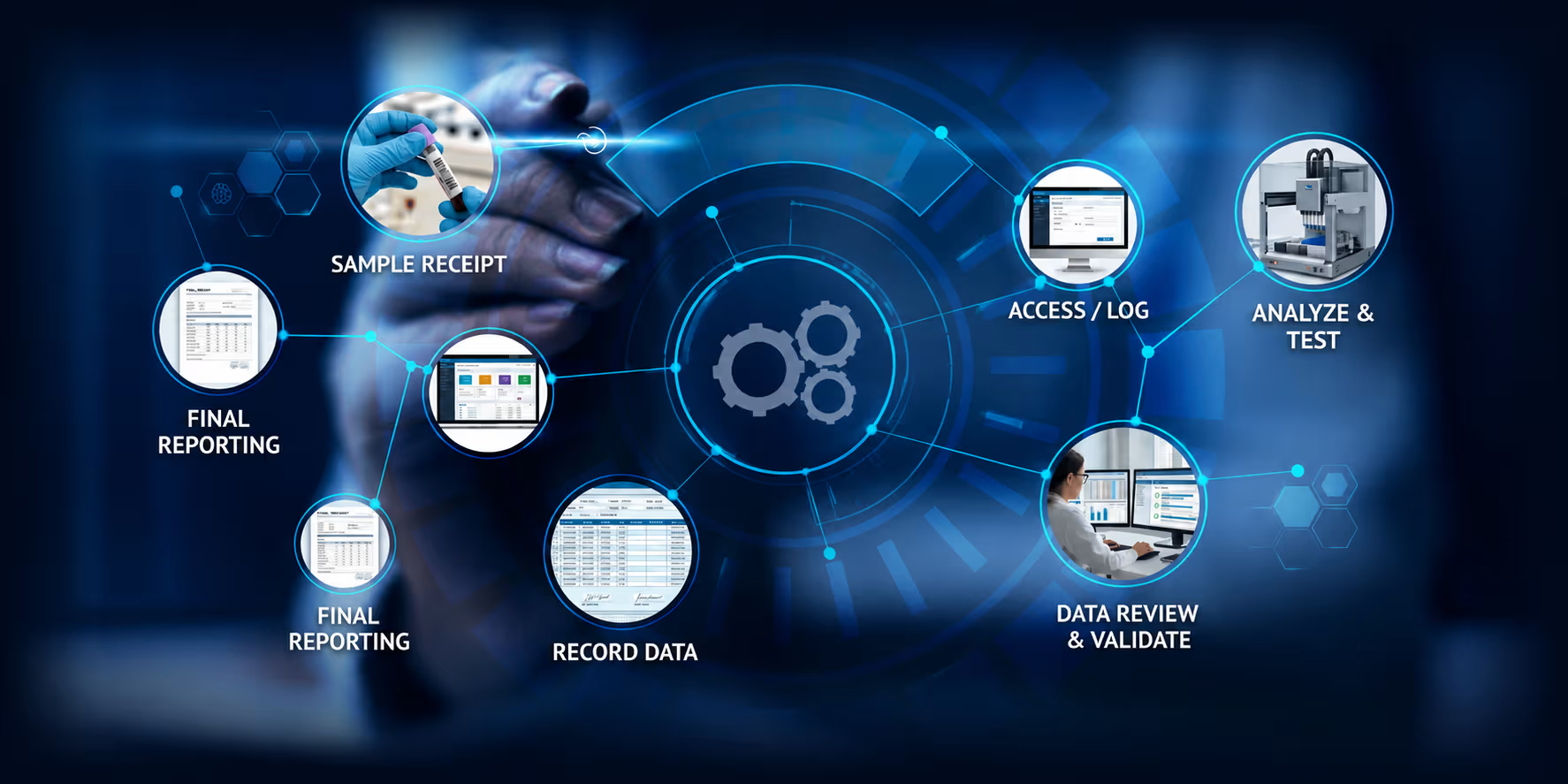
A sample moves through registration, workflow assignment, testing and data capture, review and approval, and finally reporting and archival, with each step recorded for traceability.
What are the most important LIMS features?
Sample tracking, workflow automation, audit trails, reporting, instrument integration, and centralized data management are generally considered the essentials.
Why Laboratories Choose Wavefront LIMS
Wavefront LIMS is built to address each of the challenges above directly:
- Adaptability for growth: A user-configurable structure lets labs add tests, fields, and workflows directly from the interface, reducing reliance on vendor support for routine changes.
- Robust traceability: Built with accreditation in mind, with auditing, traceability, and user security integrated throughout the system.
- Efficient prioritization: A laboratory status board keeps the whole team aligned on what matters most, in real time.
- Advanced data management: A natural-language search module makes data retrieval and analysis accessible without writing custom queries.
If your laboratory is experiencing growing pains in any of these areas, it may be time to see what a modern LIMS can do.

A LIMS workflow helps laboratories automate and standardize the entire sample lifecycle, from sample receipt and testing to approvals and final reporting. Learn how workflow automation improves traceability, reduces manual work, and increases laboratory efficiency.

Are manual spreadsheets slowing down your lab? Discover the strategic benefits of LIMS (Laboratory Information Management System). From calculating ROI and automating workflows to ensuring ISO 17025 compliance, this guide explains how moving away from Excel streamlines operations, reduces errors, and future-proofs your laboratory for growth.

Struggling with lab errors? Learn how to reduce lab errors using proven strategies like instrument integration, workflow automation, and real-time validation. Improve data accuracy, eliminate manual processes, and streamline your laboratory operations with a modern LIMS.
-
Small laboratories often struggle with manual processes, believing LIMS software is too expensive. This article explains why a modern LIMS for small labs is essential for efficiency and compliance. Learn how no-code configuration, cloud security, and ROI-focused features can professionalize your lab without the heavy IT burden.