by Wavefront Software
Most small labs do not think they need a LIMS until things start to break.
Samples get misplaced. Different versions of spreadsheets start circulating. Reports take longer to complete. Audits become stressful.
At some point, Excel stops being enough.
For a long time, there has been a common belief that Laboratory Information Management Systems (LIMS) are only for large organizations. Many small and mid-sized labs assume these systems are too expensive, too complex, or simply more than what they need.
That is no longer the case.
Today, modern cloud-based solutions have made LIMS for small labs far more accessible. What used to require heavy infrastructure and dedicated IT support can now be implemented quickly and managed with a lean team.
A LIMS is no longer just a “nice to have.” It has become an important tool for improving accuracy, maintaining compliance, and supporting growth without adding unnecessary complexity.
But is it the right fit for your lab?
This article is intended for:
- Small laboratories using Excel or manual tracking methods
- Teams without dedicated IT support
- Labs experiencing growth in sample volume or client demand
- Organizations preparing for audits or accreditation such as ISO/IEC 17025
If your current processes are starting to feel harder to manage, it may be a sign that your lab is ready for a more structured system.
The Hidden Cost of “Free” Spreadsheets
The biggest competitor to a LIMS for small labs is not another software provider. It is Excel.
Spreadsheets are flexible and easy to start with, but the hidden costs become more noticeable over time:
- Time spent manually compiling reports and Certificates of Analysis
- Repeated follow-ups to check sample status
- Difficulty locating accurate historical data during audits
- Multiple file versions creating confusion
- Higher risk of manual errors
These issues do not just slow your team down. They also make it harder to scale.
As your lab grows, the workload increases along with it. What works for a small number of samples can quickly become unmanageable at higher volumes. Turnaround times increase, mistakes happen more often, and your team spends more time organizing data than doing actual lab work.
A LIMS solves this by centralizing your data and automating routine processes.
With everything in one system, your team gains real-time visibility into every sample. This reduces confusion, improves consistency, and creates a workflow that can grow with your lab.
Benefits of LIMS for Small Labs
Adopting a LIMS can significantly improve day-to-day operations:
- Reduce manual work and administrative overhead
- Improve turnaround time for testing and reporting
- Maintain consistency and accuracy across processes
- Ensure audit readiness and data traceability
- Support growth without increasing headcount
These benefits make it easier for small labs to operate efficiently while preparing for future expansion.
Cloud-Based LIMS: Enterprise Power Without the Overhead
In the past, implementing a LIMS required a large upfront investment. Labs needed to purchase servers, manage databases, and rely on IT support to maintain the system.
For many small labs, this created a barrier.
Modern LIMS platforms now use a cloud-based model. This removes the need for on-site infrastructure and allows teams to access the system through a browser.
With platforms built on infrastructure such as Microsoft Azure, small labs can benefit from:
- Reliable uptime and system availability
- Automatic backups and disaster recovery
- Secure data storage and encryption
- Performance that scales with your operations
This approach allows your team to focus on lab work instead of system maintenance. A cloud-based LIMS for small labs allows teams to scale without managing infrastructure.
Essential Features In A LIMS For Small Labs
Not all LIMS platforms are designed for smaller teams.
Many systems are built for large enterprises and include complex features that add cost without providing practical value.
A LIMS for small labs should focus on the core workflow:
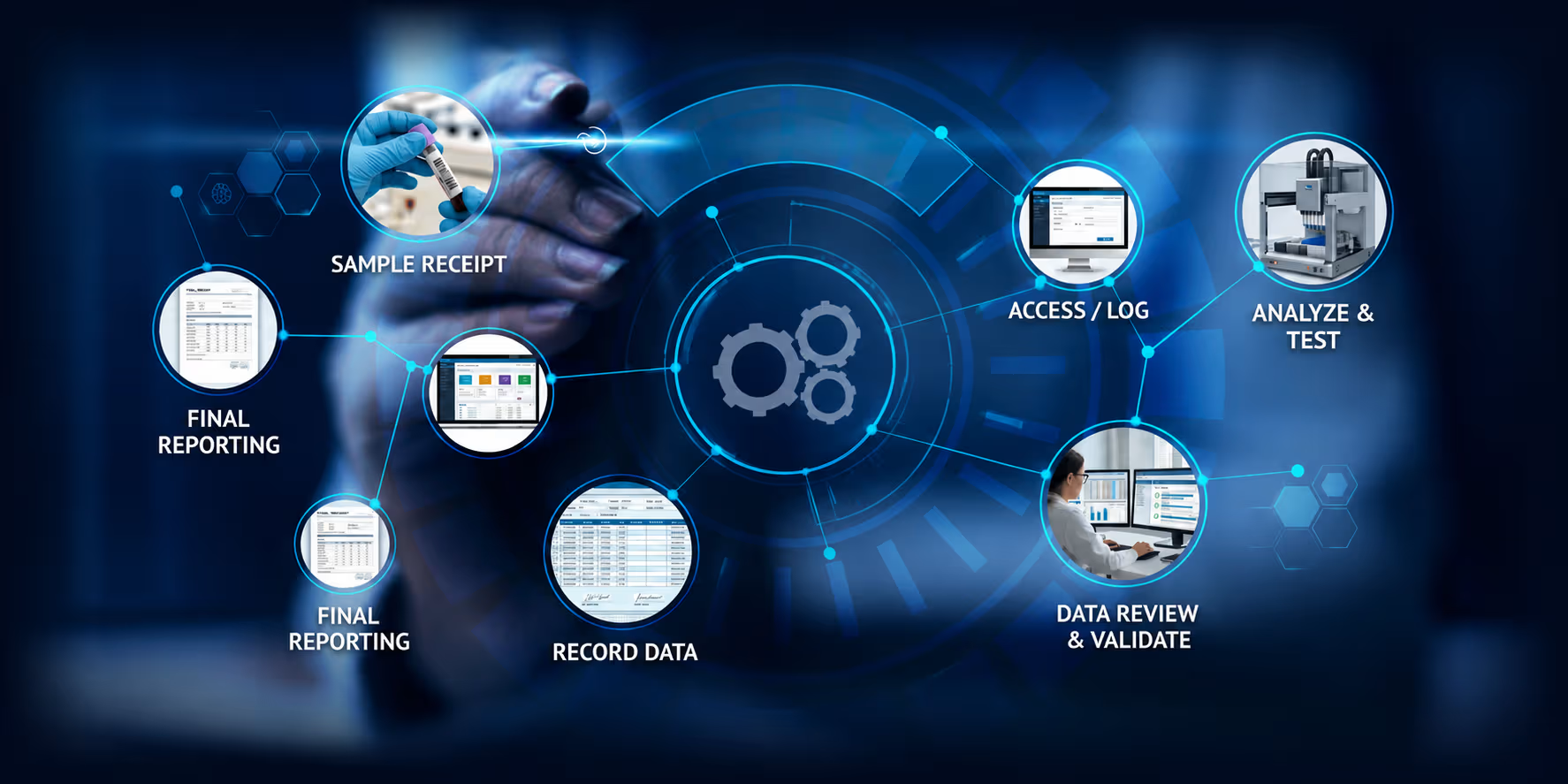
Sample → Test → Result → Report
Here are the features that matter most:
1. No-Code Configurability
Small labs need flexibility. Processes, test methods, and reporting requirements can change frequently.
A modern LIMS should allow you to:
- Add or modify test methods
- Adjust workflows
- Update report formats
- Configure data fields and specifications
All without relying on developers.
Wavefront LIMS Small Lab Edition (SLE) is designed with this flexibility in mind, allowing your team to make updates quickly and independently.
2. Real-Time Sample Tracking
Visibility improves efficiency.
Your team should be able to easily see:
- Which samples are in progress
- What is overdue
- Where delays are occurring
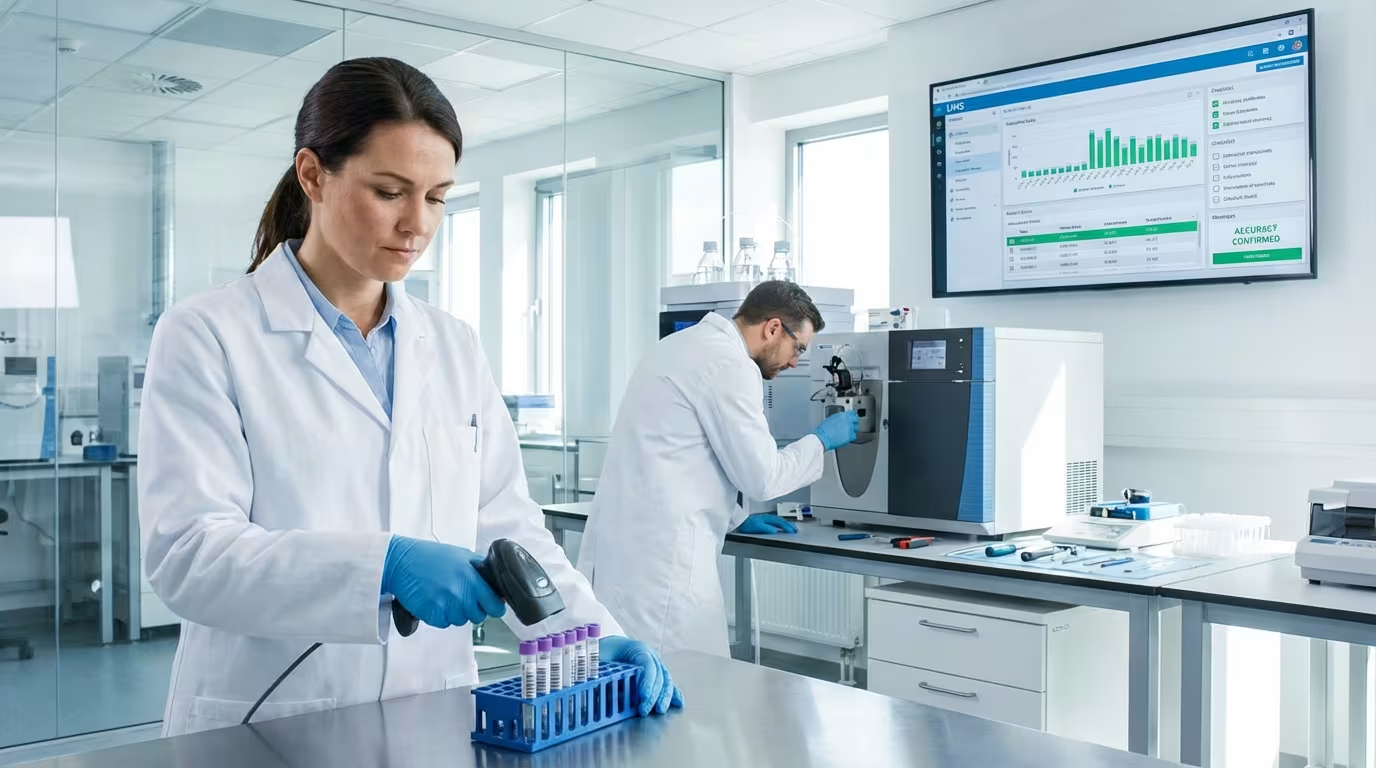
A centralized dashboard provides real-time insight so everyone works from the same information. This reduces confusion, improves turnaround time, and helps prevent errors.
3. Built-In Support for Commercial Labs
For commercial testing labs, a LIMS also plays a role in revenue generation.
It should support processes such as:
- Client test requests
- Online access to results through a customer portal
- Automated report delivery
- Integrated invoicing
Connecting these steps improves communication and helps accelerate billing.
Ready to transform your laboratory’s data management capabilities? Wavefront LIMS provides comprehensive solutions to address all these challenges while ensuring regulatory compliance and data integrity. Click here to schedule a demo today!
Security and Compliance
Small labs are not exempt from security risks or compliance requirements.
If your lab is working toward standards such as ISO/IEC 17025, you need to demonstrate:
- Data integrity
- Traceability
- Controlled access
- Audit readiness
A LIMS helps enforce these requirements consistently.
Important features include:
- Audit trails that track all changes
- User roles and permission controls
- Secure cloud-based data storage
Wavefront Software is SOC 2 Type II compliant, meaning its systems are independently audited for security and reliability. This helps protect your data and builds trust with your clients.
Understanding the Total Cost of Ownership
When evaluating a LIMS for small labs, it is important to look beyond the initial cost.
Traditional systems often include hidden expenses such as:
- Annual maintenance fees
- High consulting costs for system changes
- Internal IT support requirements
Modern LIMS platforms use a subscription-based model, which provides more predictable costs.
Because systems like Wavefront LIMS Small Lab Edition are configurable without coding, your team can make changes without relying on external consultants. This reduces long-term costs and improves efficiency.
Support That Understands Your Lab
Working with a large software vendor can sometimes mean long response times and limited personalized support.
For small labs, quick and reliable support is critical.
Wavefront Software provides US-based support focused on understanding your specific workflows and challenges. This ensures you are not just another support ticket, but a customer with unique needs.
Preparing Your Lab for Growth
Implementing a LIMS is not just about solving current challenges. It is about preparing for the future. Choosing the right LIMS for small labs is an important step toward improving efficiency and supporting long-term growth.
The right system should be able to:
- Handle increasing sample volumes
- Adapt to new test methods
- Integrate with other systems such as ERP or accounting tools
By moving away from spreadsheets and manual processes, your lab builds a stronger data foundation. This makes it easier to analyze trends, improve decision-making, and scale operations with confidence.

If you are ready to explore how a tailored, secure, and agile LIMS for small labs can be, the next step is simple. See the software in action and discuss your specific workflow with our experts.

A LIMS workflow helps laboratories automate and standardize the entire sample lifecycle, from sample receipt and testing to approvals and final reporting. Learn how workflow automation improves traceability, reduces manual work, and increases laboratory efficiency.

Are manual spreadsheets slowing down your lab? Discover the strategic benefits of LIMS (Laboratory Information Management System). From calculating ROI and automating workflows to ensuring ISO 17025 compliance, this guide explains how moving away from Excel streamlines operations, reduces errors, and future-proofs your laboratory for growth.

Struggling with lab errors? Learn how to reduce lab errors using proven strategies like instrument integration, workflow automation, and real-time validation. Improve data accuracy, eliminate manual processes, and streamline your laboratory operations with a modern LIMS.
-
Most laboratories start out using Excel to manage samples and workflows, but as they grow, it becomes difficult to maintain a reliable LIMS workflow. Here are five signs your lab may have outgrown spreadsheets and what to do next.