by Wavefront Software
In modern laboratory environments, accuracy isn’t optional—it’s essential. Whether your lab supports advanced manufacturing, environmental compliance, or commercial testing, even a single error can lead to costly rework, delayed timelines, and damaged client trust.
Traditionally, labs relied on training to minimize mistakes. But in high-volume, repetitive environments, human error is inevitable. Fatigue, distractions, and manual data entry all contribute to data integrity issues.
To truly reduce lab errors, leading laboratories are shifting from managing people to optimizing systems.
Wavefront Software approaches this challenge by helping labs design error-proof processes through a unified, cloud-based Laboratory Information Management System (LIMS). Instead of reacting to mistakes, labs can prevent them altogether with built-in digital controls.
Below are five proven strategies to reduce lab errors and improve operational efficiency.
1. Eliminate Manual Transcription with Instrument Integration
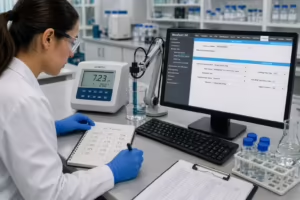
Manual data entry remains one of the biggest sources of lab errors.
When technicians transfer results from instruments into spreadsheets or logs, even a small error rate can lead to significant data inaccuracies over time.
To reduce lab errors effectively, laboratories must eliminate manual transcription wherever possible.
Modern LIMS platforms integrate directly with lab instruments and automatically capture results the moment they are generated. This removes the need for manual input and ensures data is recorded accurately every time.
Beyond accuracy, instrument integration creates a complete audit trail. It captures when data was recorded, which instrument was used, and which sample was analyzed. This level of traceability is critical for compliance and data integrity.
2. Enforce Consistency with Configurable Workflows
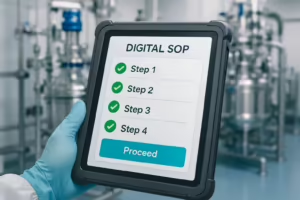
Relying on memory or paper-based SOPs introduces risk. Even experienced technicians can skip steps or interpret procedures differently.
A better approach to reduce lab errors is to enforce standardized workflows digitally.
With a configurable LIMS, SOPs become guided workflows that ensure every step is followed correctly. For example:
- Required fields must be completed before proceeding
- Calibration checks can be enforced
- Invalid inputs can be blocked in real time
Wavefront LIMS uses a configuration-first approach, allowing labs to adapt workflows without heavy IT involvement. This ensures consistency across all users, regardless of experience level.
3. Strengthen Chain of Custody with Barcoding
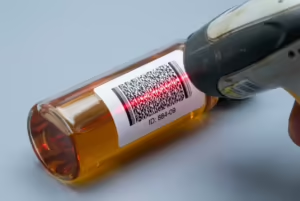
Sample misidentification is one of the most critical lab errors and one of the easiest to prevent.
Barcoding provides a simple and effective way to maintain sample identity throughout its lifecycle.
Each sample is assigned a unique barcode upon receipt. At every stage, including preparation, testing, and storage, technicians scan the barcode to confirm they are working with the correct sample.
This approach:
- Eliminates labeling errors
- Prevents mix-ups between similar samples
- Creates a complete, time-stamped chain of custody
For labs following ISO/IEC 17025 standards, this level of traceability is essential.
4. Automate Specification and Quality Checks
Manually comparing results against specifications is time-consuming and prone to error.
Technicians may overlook subtle deviations, especially when working with large datasets or complex requirements.
A more reliable way to reduce lab errors is through automated specification management.
With a LIMS:
- Results are automatically checked against predefined limits
- Out-of-spec results are flagged instantly
- Alerts can be triggered for immediate action
This real-time validation allows issues to be addressed immediately while the sample is still available, rather than being discovered later during report review.
5. Control Access with User Permissions
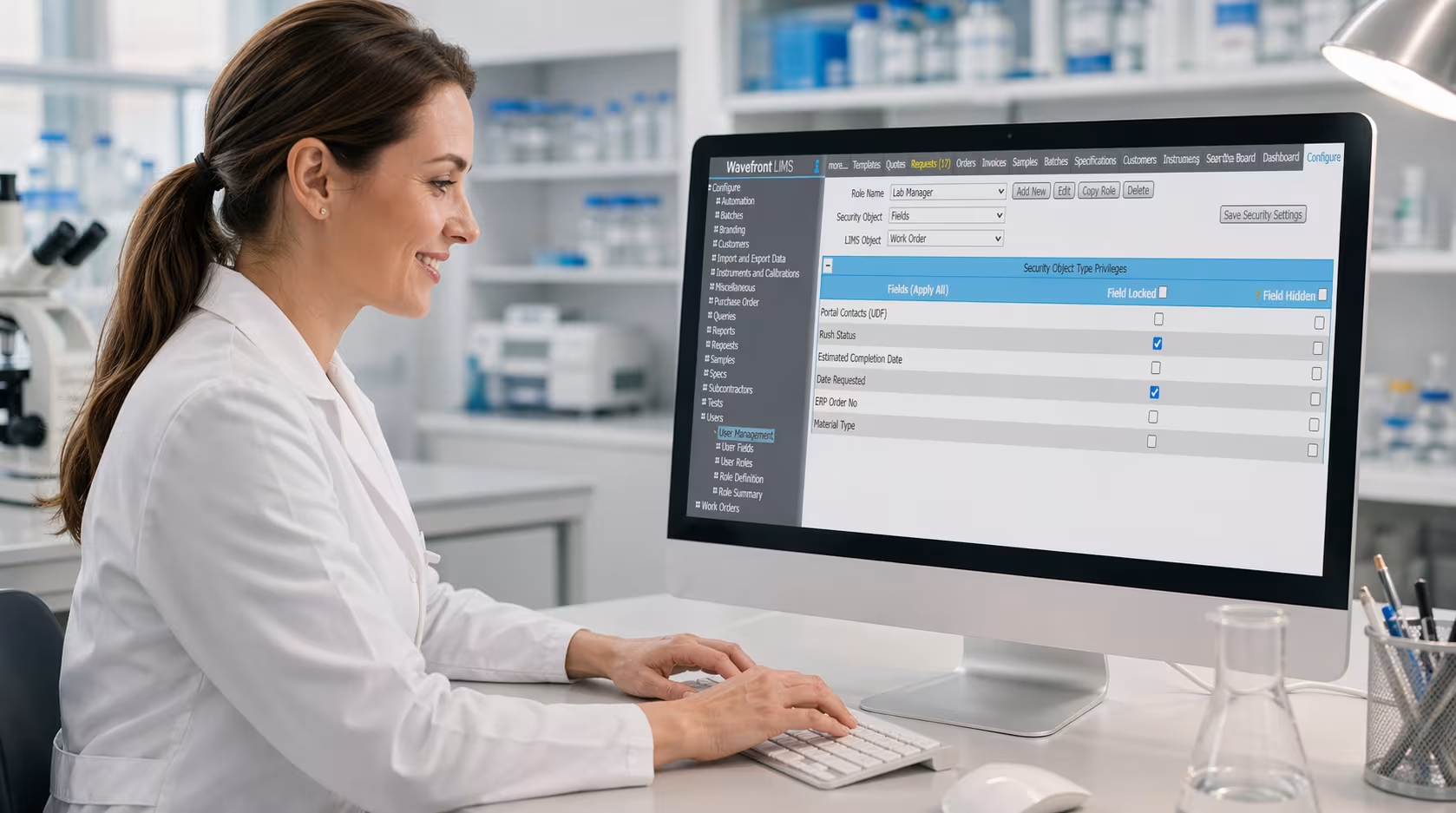
Not all errors come from process issues. Some come from unauthorized or unqualified actions.
Without proper controls, users may perform tests or enter data they are not trained for.
A LIMS helps reduce lab errors by enforcing role-based permissions:
- Users can only access functions they are authorized for
- Test execution can be restricted by training status
- Data entry can be limited to qualified personnel
This ensures that onlytrained staff perform critical tasks and reduces the risk of invalid or non-compliant data.
Conclusion
Reducing lab errors is not about asking teams to be more careful. It is about building systems that make accuracy the default.
By implementing instrument integration, configurable workflows, barcoding, automated validation, and user access controls, laboratories can significantly improve data integrity, efficiency, and compliance.
These strategies do more than prevent mistakes. They allow your team to focus on meaningful scientific work instead of manual processes.
Ready to Reduce Lab Errors?
Stop reacting to errors and start preventing them.
With Wavefront LIMS, your laboratory can streamline workflows, improve accuracy, and ensure compliance within a single integrated system.

If you are ready to reduce lab errors and improve data accuracy across your workflows, the next step is simple. See how a modern LIMS can eliminate manual data entry, connect directly with your instruments, and help your team work with greater confidence.

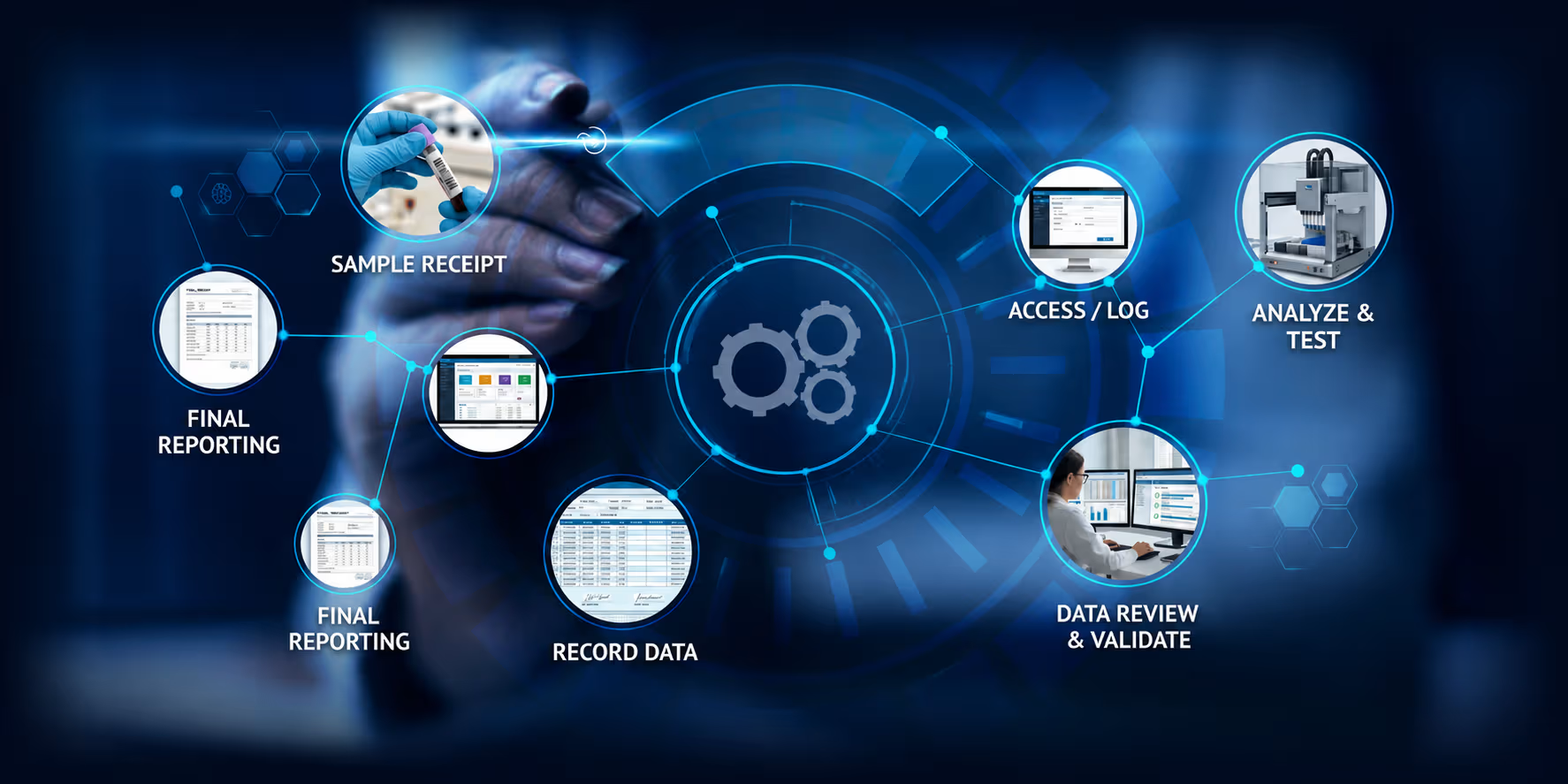
A LIMS workflow helps laboratories automate and standardize the entire sample lifecycle, from sample receipt and testing to approvals and final reporting. Learn how workflow automation improves traceability, reduces manual work, and increases laboratory efficiency.

Are manual spreadsheets slowing down your lab? Discover the strategic benefits of LIMS (Laboratory Information Management System). From calculating ROI and automating workflows to ensuring ISO 17025 compliance, this guide explains how moving away from Excel streamlines operations, reduces errors, and future-proofs your laboratory for growth.
-
Small laboratories often struggle with manual processes, believing LIMS software is too expensive. This article explains why a modern LIMS for small labs is essential for efficiency and compliance. Learn how no-code configuration, cloud security, and ROI-focused features can professionalize your lab without the heavy IT burden.
-
Most laboratories start out using Excel to manage samples and workflows, but as they grow, it becomes difficult to maintain a reliable LIMS workflow. Here are five signs your lab may have outgrown spreadsheets and what to do next.