by Arjene DelaCruz
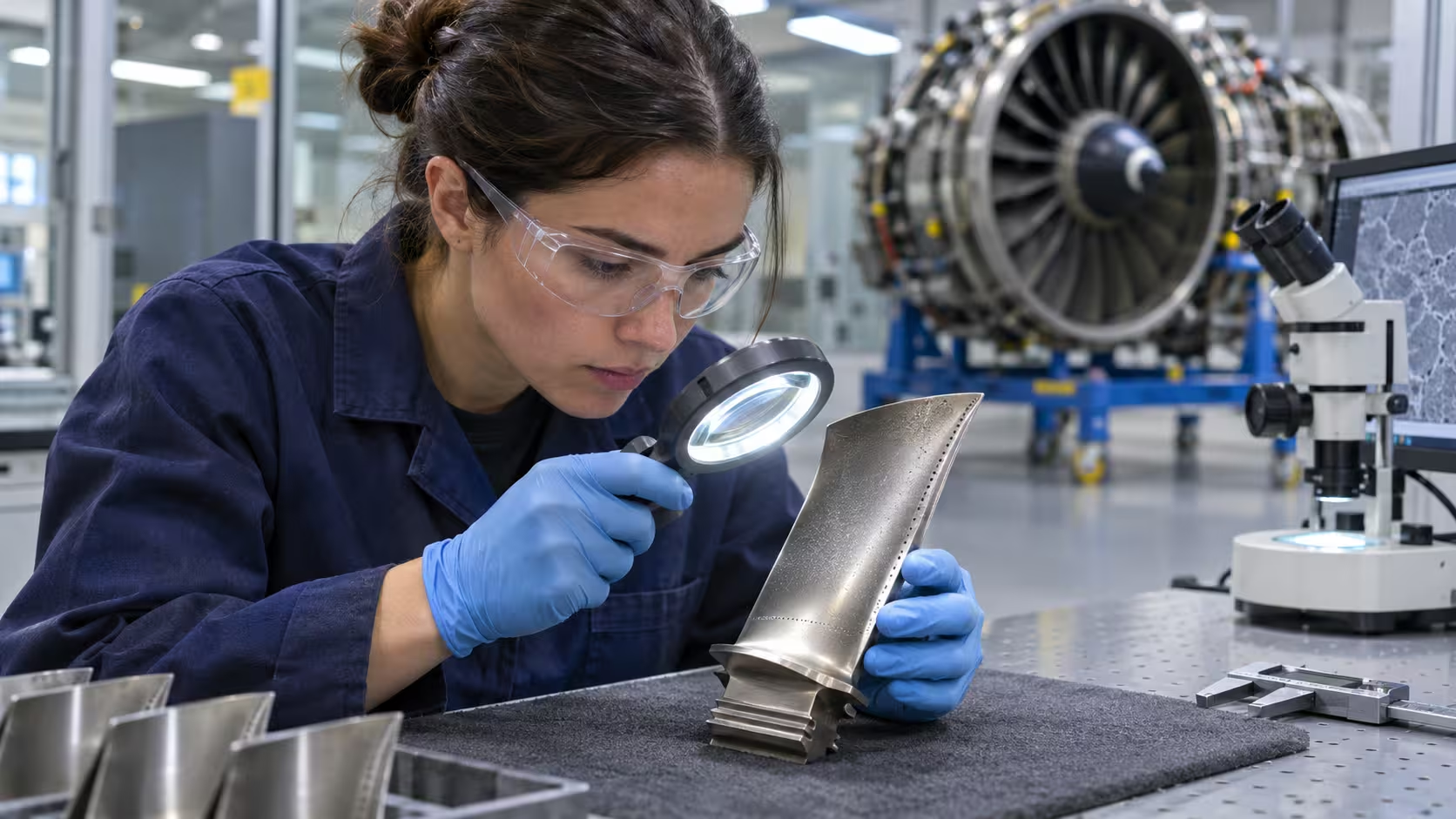
A tensile result on a titanium forging is only useful if you can trace it back to the coupon it was cut from, the heat lot, the test method revision and the calibration of the frame that tested it. When an auditor or a customer asks, that trail has to be there in seconds, not rebuilt from spreadsheets.
That traceability is what separates a LIMS built for materials labs from a general-purpose one. Whether you run an internal QC lab at a mill, forge or foundry, or a third-party lab testing to AMS and ASTM specs, this guide compares seven LIMS options and gives you the questions to ask in every demo.
Disclosure: Wavefront publishes this guide and is included in it. This is Wavefront’s editorial comparison, not an independent product test. Competitor descriptions are based on vendor-published information reviewed in November 2026; features, plans and prices can change. Confirm current terms with each vendor.
The Short Answer
For metals, alloys and composites testing labs that need heat-to-specimen traceability, specification checks and audit records to support ISO/IEC 17025 or Nadcap work, we recommend Wavefront LIMS. Every lab is different, so use the criteria and demo questions below to compare each vendor against your own workflows.
Materials Testing LIMS Comparison
| LIMS | Best fit | Deployment | Materials-testing strengths | Published starting price |
|---|---|---|---|---|
| Wavefront LIMS | Metals, alloys and composites QC and testing labs | Cloud (SOC 2 Type II) | Heat, lot, coupon and specimen traceability; specifications; SPC; CoC, CTR and EN 10204 3.1 reports | $2,520/user/year for Small Lab Edition (up to 10 users) |
| QBench | Configurable QC and third-party testing | Cloud | Method worksheets, specimen tracking, batch automation | $16,500/year for 5 users |
| LIMSey | Engineering and mechanical test labs | Cloud | Test requests, scheduling, equipment and calibration tracking | $300/user/month (lab seat) |
| Confience | High-volume industrial materials QC | Cloud-based (vendor-described) | SPC; physical-test workflows; instrument data acquisition and calculations | Not published |
| LabWare | Large, multi-site enterprises | SaaS (where available), cloud-hosted or self-hosted | Enterprise QA/QC, instrument interfaces | Quote only |
| Lockbox LIMS | Labs running on Salesforce | Salesforce cloud | Sample tracking, protocol execution, instrument management | $175/user/month standard user; $25/user/month per add-on; $9,000 annual minimum |
| Scispot | Battery, advanced materials and industrial R&D labs | Cloud-native | Synthesis-to-testing lineage; instrument data capture with raw files; QMS for documents and training | Custom annual pricing; unlimited users; no per-seat fees |
Published prices cover different features and services, so they aren’t directly comparable quotes. Compare first-year and recurring costs for the same number of users.
What Should a Materials Testing Lab Look for in a LIMS?
Most LIMS can track samples. These seven criteria separate the ones that fit materials testing work.
1. Heat, lot, coupon and specimen traceability One heat lot becomes several coupons, and each coupon becomes specimens with their own tests and retests. Your LIMS should keep every result tied to its specimen, coupon, heat or lot number, serial number and finished product, with a full audit history. Ask the vendor to show one result traced all the way back.
2. Specifications against AMS, ASTM and customer requirements Aerospace and metals labs test against material specs that change over time. Look for specification management that checks results against spec and warning limits as they’re entered, flags out-of-spec values, and keeps old revisions so historical results still make sense.
3. Multi-replicate test data and calculations Materials tests rarely produce a single number. A Charpy test records several values across replicates; an alloy chemistry result needs totals and a balance element. Check that the LIMS handles replicates, units, rounding and raw values without spreadsheets on the side.
4. Nadcap and ISO/IEC 17025 audit records Auditors ask for method revisions, equipment calibration and who changed what. A LIMS should keep those records in one place with a complete audit trail. It supports accreditation; the lab remains responsible for its procedures and competence.
5. Instrument and ERP integration Retyping results from XRF, OES, ICP or a tensile frame is where transcription errors start. Look for direct instrument interfacing, plus ERP integration so lot and order data flows in and approved results flow back to production.
6. Certified reporting Aerospace customers expect Certificates of Compliance, Certified Test Reports and EN 10204 3.1 certificates. Your LIMS should build them from approved results and ERP data, in each customer’s format.
7. Transparent pricing and what’s included Ask what the subscription covers: hosting, support, upgrades, sandbox, instrument connections, training and implementation. Two LIMS with similar list prices can differ a lot once those are added.
A Closer Look at Each LIMS
1. Wavefront LIMS: our pick for metals, alloys and composites testing labs
Wavefront has built LIMS software since 2002, and many of our customers are metals, alloys and manufacturing QC labs. Wavefront LIMS gives materials labs heat, lot, coupon and specimen traceability, along with instrument and calibration records. It checks results against specifications, supports SPC, and builds customer reports including CoCs, Certified Test Reports and EN 10204 3.1 certificates. It runs in a SOC 2 Type II cloud environment, and we keep a 99% customer retention rate. See Wavefront LIMS for advanced materials, or bring a real workflow to your demo and we’ll show you how it fits your lab.
2. QBench: a cloud LIMS for configurable QC and third-party testing workflows
QBench describes no-code worksheets, custom fields and batch automation, and markets the product to physical, mechanical and materials-testing labs. Its published starting price is $16,500/year for five users; file-parser instrument integration is listed in Growth and equipment management in Advanced. QBench materials describe training at $5,000–$10,000 and managed integrations from $1,500/year; confirm whether those estimates and services apply to your scope.
3. LIMSey: for engineering and mechanical test labs
LIMSey describes job and sample management, test requests, scheduling, equipment and calibration tracking, and reporting. Its published pricing is $300 per lab seat per month and $45 per requester seat per month. Standard setup is described as included; custom templates, historical-data migration or custom work may be separately scoped and priced.
4. Confience: for high-volume materials QC
Confience’s materials page describes repetitive physical testing, failure analysis, electrical tests, particle-size and sieve testing, SPC, and instrument data acquisition with calculations. Pricing is not published on the materials page; request a quote. Confience describes its platform as cloud-based.
5. LabWare: for large, multi-site or complex laboratory environments
LabWare offers SaaS (where available), cloud-hosted and self-hosted deployment options, configuration and instrument interfaces. Pricing is quote-based; confirm deployment, implementation scope and costs directly with LabWare.
6. Lockbox LIMS: for labs using Salesforce
Third Wave Analytics says Lockbox runs on Salesforce and offers sample tracking, protocol execution, instrument management and inventory modules. Published standard-user pricing starts at $175 per user per month, with $25 per user per month for each add-on module and a $9,000 annual subscription minimum. Implementation services are separately priced; request a scoped quote.
7. Scispot: for battery, advanced materials and industrial R&D labs
Scispot is a cloud-native lab platform that combines LIMS, ELN, SDMS and QMS capabilities, with barcoded sample management, configurable workflows, audit trails and instrument data capture that keeps raw and processed files. Its materials case studies focus on battery and advanced materials R&D, linking synthesis batches through characterization and testing. Scispot doesn’t publish a seat price; it uses custom annual pricing with unlimited users, and includes integrations, workflow design and training within the agreed scope. If your lab ships certified material, ask how it handles CoCs, Certified Test Reports and EN 10204 3.1 certificates.
How Wavefront Handles a Materials Testing Workflow
Say your lab receives samples from several heat lots of a titanium alloy that need tensile, hardness, metallurgical and chemistry testing before release:
- Lot and order details come in from your ERP, and each sample, coupon and specimen is logged against its heat lot.
- Results flow in from connected instruments such as XRF or OES, or are entered in grids built for each method, with replicates and raw values kept.
- Every result is checked against the AMS or customer specification as it’s entered; out-of-spec values are flagged for review.
- Approved results feed a Certified Test Report or CoC in the customer’s format, and every step is in the audit trail for your next Nadcap or ISO 17025 audit.
Customer Results
- Special Metals (Huntington): Replaced a 1980s in-house system and now returns results within minutes of sample receipt, with hundreds of thousands of dollars in annual savings.
- Tosoh SMD: Replaced four in-house systems on a tight timeline, and lab staff can now add tests and fields themselves.
- Howmet Aerospace: “Wavefront LIMS has truly benefited our lab since 2014. The software is easy to use, has improved efficiency, reduced paperwork, and provides excellent tools and resources for configuration, troubleshooting, and support.” — Alexis Smith, LIMS Administrator
How Much Does a Materials Testing LIMS Cost?
LIMS pricing depends on users, features, integrations, implementation and support. QBench publishes a Foundation starting price of $16,500/year for five users; LIMSey lists $300/month for a lab seat and $45/month for a requester seat; Lockbox lists $175/month for a standard user, with add-on modules and a $9,000 annual minimum. Wavefront’s Small Lab Edition starts at $2,520 per user per year (about $210/month) for labs with up to 10 users. Cloud hosting, technical support, product updates and a sandbox are included in every subscription. LabWare and Confience do not publish a fixed starting price on the pages reviewed, and Scispot uses custom annual pricing with unlimited users rather than per-seat fees.
When you compare, look past the subscription: ask about setup and implementation, training, instrument and ERP connections, data migration and changes to workflows later. See Wavefront LIMS pricing →
Questions to Ask in Every LIMS Demo
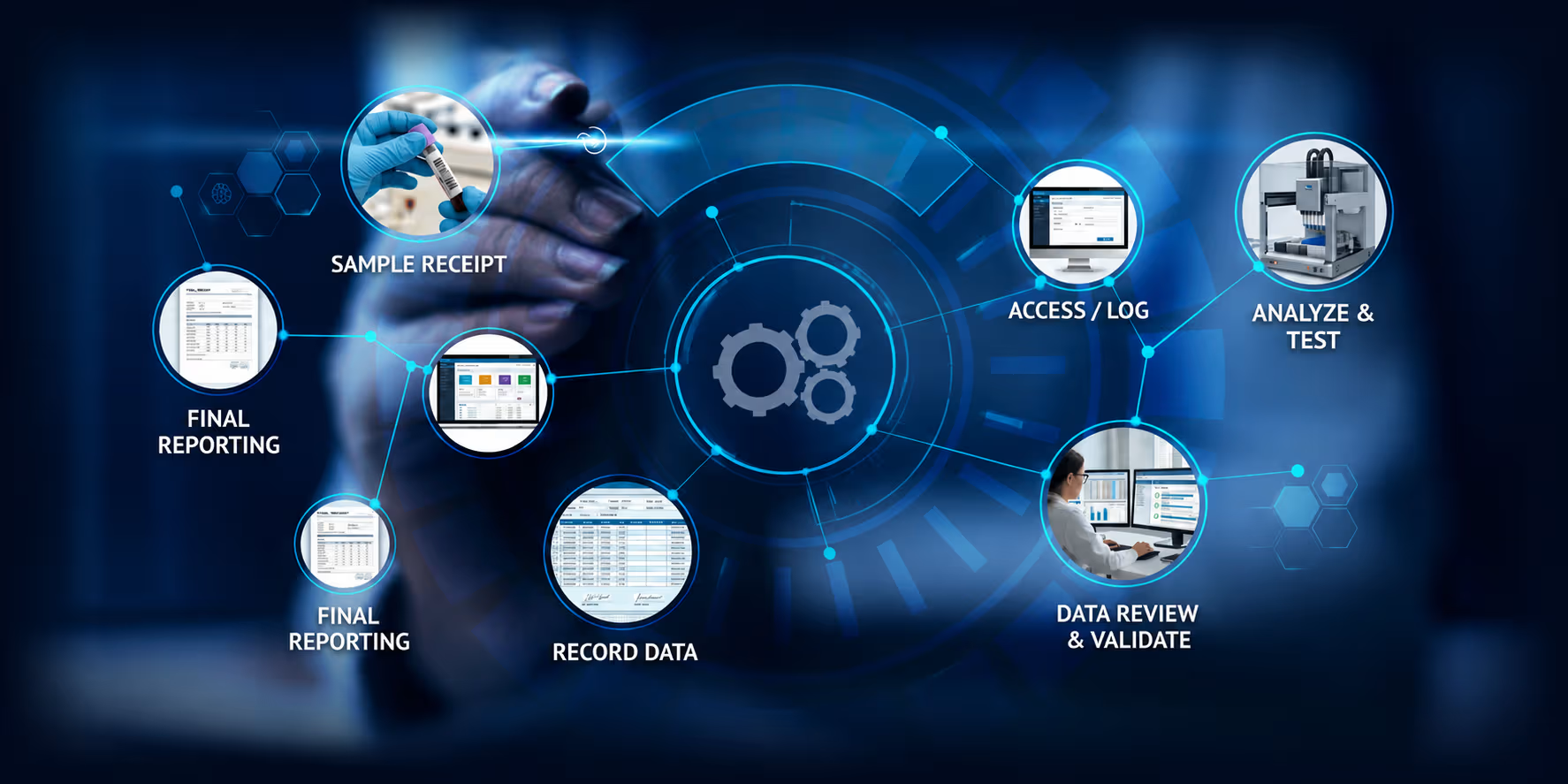
Bring one real workflow to each demo, from sample receipt to final certificate, and ask:
- “Show me one result traced back to its coupon, heat lot and instrument calibration.”
- “How do you handle a specification revision without changing historical results?”
- “Can you connect to our instruments, using our software and file format?”
- “Show me a CoC or Certified Test Report built from our data.”
- “What will our Nadcap or ISO 17025 auditor see in the audit trail?”
- “Which of our requirements are standard, which are configuration, and which cost extra?”
- “What’s included in the subscription, and what are the one-time and add-on costs?”
Frequently Asked Questions
What is the best LIMS for a materials testing lab?
It depends on your tests, specifications, reporting and integrations. We recommend Wavefront LIMS for metals, alloys and composites labs that need heat-to-specimen traceability and materials reporting. Compare it with QBench, LIMSey, Confience, LabWare, Lockbox and Scispot using your own workflows and requirements.
Can a LIMS track heat numbers and material genealogy?
Many configurable systems can be set up to link material lots, samples and test results. Ask vendors to demonstrate your full chain of custody, including heat/lot, coupon, specimen, retests and finished product. Wavefront LIMS supports this traceability for materials labs.
Does a LIMS make a lab Nadcap or ISO/IEC 17025 compliant?
No. A LIMS can help manage records, methods, training, calibration and audit trails, but software alone does not establish accreditation or compliance. The lab remains responsible for its procedures, competence and conformity assessment.
Can a LIMS generate Certificates of Compliance and EN 10204 3.1 documents?
Some systems can generate reports or certificates from approved data, but confirm the required content, approvals and customer format with the vendor. Wavefront LIMS supports CoCs, Certified Test Reports and EN 10204 3.1 documents; the lab remains responsible for ensuring each issued document is accurate and authorized.
How much does a materials testing LIMS cost?
Published prices use different seat types, user counts, plans and included services, so they are not directly comparable. QBench lists $16,500/year for five users; LIMSey lists $300/month per lab seat and $45/month per requester seat; Lockbox lists $175/month per standard user plus optional modules and a $9,000 annual minimum. Wavefront’s Small Lab Edition is $2,520 per user per year (about $210/month) for labs with up to 10 users. Scispot uses custom annual pricing with unlimited users.
All product and company names are trademarks or registered trademarks of their respective owners. Wavefront Software is not affiliated with or endorsed by QBench Inc., LIMSey, Confience, LabWare, Scispot, or Third Wave Analytics, Inc. Competitor information was taken directly from each vendor’s website in November 2026 and may have changed.

Compare LIMS for aerospace and defense labs: material traceability, certified reports, Nadcap and AS9100 records, ERP links and published pricing.

A LIMS workflow helps laboratories automate and standardize the entire sample lifecycle, from sample receipt and testing to approvals and final reporting. Learn how workflow automation improves traceability, reduces manual work, and increases laboratory efficiency.

Are manual spreadsheets slowing down your lab? Discover the strategic benefits of LIMS (Laboratory Information Management System). From calculating ROI and automating workflows to ensuring ISO 17025 compliance, this guide explains how moving away from Excel streamlines operations, reduces errors, and future-proofs your laboratory for growth.

Struggling with lab errors? Learn how to reduce lab errors using proven strategies like instrument integration, workflow automation, and real-time validation. Improve data accuracy, eliminate manual processes, and streamline your laboratory operations with a modern LIMS.