by Wavefront Software
What is Laboratory Data Management?
Laboratory data management is the process of collecting, organizing, reviewing, storing, and retrieving laboratory information throughout the sample lifecycle. For many labs, this information starts in spreadsheets, paper records, instrument files, and disconnected software systems. As testing volumes increase, those manual processes become harder to manage and create risks around accuracy, traceability, reporting, and compliance.
A laboratory information management system (LIMS) centralizes sample information, test results, specifications, approvals, reporting, and historical records in one system. By reducing manual data entry and connecting laboratory workflows, a LIMS helps improve productivity, data integrity, and visibility across operations.
Why Spreadsheets Create Risk for Lab Data Management
Many laboratories still rely on spreadsheets and manual processes to manage testing information. This increases the risk of human error, slows productivity, and makes maintaining data integrity more difficult. A Laboratory Information Management System (LIMS) centralizes laboratory information, reduces manual work, and helps improve data accuracy, efficiency, and traceability. Implementing an effective LIMS solution improves accuracy and productivity by reducing manual data entry and associated errors.
Automatic Data Import – Instrument Interfacing
Manual data entry is prone to human error. A common workflow without a LIMS looks like this:
- Enter sample information into equipment.
- Analyze the tests.
- Print the results.
- Manually search for the applicable samples in spreadsheets.
- Type the results into the spreadsheet one-by-one.
Transpositions, misplaced decimals, or results recorded under the wrong tests are too easy. However, they are quite common for laboratories utilizing spreadsheets and similar programs to manage their data. Instrument interfaces through a laboratory information management system (LIMS) simplify this process. Below is a typical workflow for a laboratory utilizing bi-directional instrument interfacing:
- Find the desired sample in LIMS and send the test parameters to the instrument electronically through automation.
- Tests are analyzed.
- Results are automatically imported directly into the proper sample and test fields in LIMS.
Instrument files with testing data can directly interface with LIMS to automatically populate results, eliminating manual data entry errors. Then, by leveraging bi-directional instrument integration, LIMS can also provide instruments with required testing specifications and sample IDs upfront, further reducing risk of mistakes. With LIMS taking care of repetitive admin tasks, the laboratory can focus entirely on testing, not paperwork. This hands-free approach boosts laboratory productivity, efficiency, and accuracy.
LIMS Sample Management and Master Data
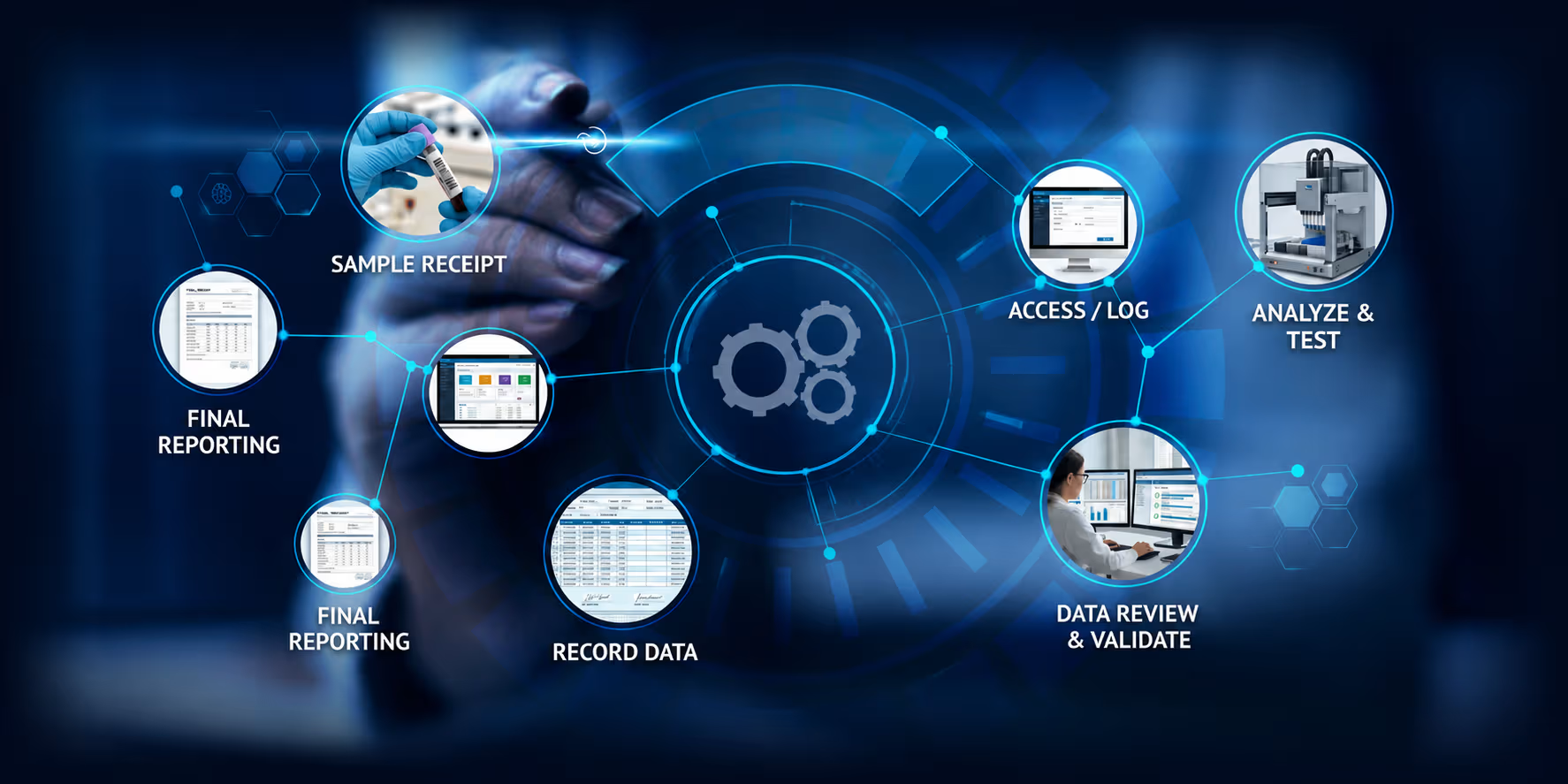
Effective LIMS data management begins with accurate sample tracking, standardized workflows, and centralized master data. Modern LIMS software provides comprehensive sample management capabilities that allow laboratories to track samples from receipt through final reporting.
A LIMS sample management workflow typically includes:
- Sample registration and accessioning
- Chain of custody tracking
- Test assignment
- Sample storage location management
- Status tracking
- Final approval and reporting
In addition to sample records, laboratories often maintain master data within the LIMS. This may include customer information, products, specifications, test methods, instruments, locations, and personnel records. Centralized master data helps ensure consistency across laboratory operations and reduces the risk of duplicate or outdated information being used during testing.
By combining sample management and master data management within a single platform, laboratories improve traceability while simplifying daily operations.
Effective sample tracking and master data control are foundational components of successful laboratory data management.
Managing Manual Test Data with LIMS Grids
For laboratories, managing data efficiently is critical. While a LIMS supports the automatic import of instrument results, some tests still require manual data entry (typically due to limitations of the test equipment). Therefore, laboratories need efficient ways to streamline manual data entry when instrument integration is not available.
One method to address this is through data entry grids. Test grids allow lab technicians to load multiple related tests onto a single screen. Instead of navigating between different screens, all results can be entered rapidly in one place. This saves significant time compared to traditional LIMS data entry. Additionally, entering data in groups as they are analyzed reduces the chances for error by reducing touch points and risk for loading incorrect samples or tests. Test grids can also be configured to display all of the needed information in one screen, aiding the visibility of requirements and streamlining the data management.
Improving LIMS Data Entry and Data Capture
Effective LIMS data capture combines automation, structured forms, validation rules, and easy-to-use entry screens. These features standardize data entry, reduce formatting errors, and ensure required information is captured before results are reviewed or approved.
By combining automated instrument integration with configurable data entry tools, laboratories can improve productivity while maintaining high standards of data integrity. Structured data capture also supports traceability, reporting, and regulatory compliance requirements.
Verifying Accuracy: LIMS Data Review Tools
Lab data management with LIMS does not end with populating data. The next step is to ensure that the data is analyzed and reviewed accurately and efficiently. When managing data in spreadsheets, i.e. without a LIMS, this may incorporate opening applicable specifications and reviewing the results against each, one at a time. Perhaps the data is analyzed against SPC parameters on a monthly or quarterly basis. As laboratories grow and demand for improved throughput increases, finding methods to review the data more efficiently and accurately also becomes more important. Therefore, many LIMS solutions, such as Wavefront LIMS, provide built-in methods for improving lab data management.
Configurable automation sends notifications, updates workflow status, and populates data automatically. Real-time statistical process control (SPC) alerts immediately identify out-of-control conditions, allowing laboratories to investigate and resolve issues before they become larger problems. Customizable warning limits within specifications provide notification when values may be outside of expectation, even when they aren’t quite failing. These innovations, and more, enable proactive error-catching so technicians can actively verify data integrity as it’s completed.
LIMS Data Migration Considerations
For laboratories transitioning from spreadsheets, legacy software, or another LIMS platform, data migration is often a critical component of implementation.
Effective data management with LIMS platforms depends on accurate and well-planned data migration strategies. A successful migration helps ensure that historical laboratory data remains accessible, traceable, and reliable within the new system.
A successful LIMS data migration strategy typically involves:
- Reviewing existing laboratory records
- Identifying active and historical data
- Standardizing data formats
- Validating imported records
- Verifying sample and test traceability
Many organizations choose to migrate customer records, specifications, sample history, test methods, and quality data into the new system. Proper planning helps ensure that valuable laboratory information remains accessible while minimizing disruption during implementation.
When evaluating a LIMS solution, laboratories should understand the available tools and services that support efficient data migration.
How Data is Stored in a Modern LIMS
One major advantage of LIMS data management is the ability to quickly retrieve historical laboratory information while maintaining complete traceability. A modern laboratory data management platform stores information within a structured database rather than relying on individual spreadsheets or documents.
A modern LIMS organizes laboratory information into related records, including:
- Samples
- Tests
- Results
- Specifications
- Customers
- Products
- Instruments
- Users
This structured approach allows laboratories to quickly search historical data, maintain traceability, generate reports, and demonstrate compliance during audits.
Because all information is linked within the system, laboratories can easily trace a result back to the originating sample, instrument, test method, and analyst. This level of visibility is one of the primary reasons organizations invest in a laboratory data management system.
Summary
Managing laboratory information becomes increasingly difficult as testing volumes grow and data is spread across spreadsheets, paper records, instruments, and disconnected systems. A laboratory information management system (LIMS) helps centralize information, automate data collection, improve traceability, and streamline review processes.
Modern LIMS platforms support instrument integration, sample management, structured data entry, automated workflows, statistical process control (SPC), and historical data retrieval. These capabilities help laboratories improve efficiency, maintain compliance with standards such as ISO/IEC 17025, and ensure data remains accurate and accessible throughout the sample lifecycle.
Wavefront LIMS is designed for laboratories with complex testing workflows, configurable specifications, instrument integrations, data review requirements, and reporting needs. The system helps laboratories manage information from sample receipt through final approval while reducing manual work and improving traceability. Learn how Wavefront can help your laboratory improve data management, efficiency, and visibility by scheduling a no-obligation demo.

A LIMS workflow helps laboratories automate and standardize the entire sample lifecycle, from sample receipt and testing to approvals and final reporting. Learn how workflow automation improves traceability, reduces manual work, and increases laboratory efficiency.

Are manual spreadsheets slowing down your lab? Discover the strategic benefits of LIMS (Laboratory Information Management System). From calculating ROI and automating workflows to ensuring ISO 17025 compliance, this guide explains how moving away from Excel streamlines operations, reduces errors, and future-proofs your laboratory for growth.

Struggling with lab errors? Learn how to reduce lab errors using proven strategies like instrument integration, workflow automation, and real-time validation. Improve data accuracy, eliminate manual processes, and streamline your laboratory operations with a modern LIMS.
-
Small laboratories often struggle with manual processes, believing LIMS software is too expensive. This article explains why a modern LIMS for small labs is essential for efficiency and compliance. Learn how no-code configuration, cloud security, and ROI-focused features can professionalize your lab without the heavy IT burden.